Quick links


Quick links
Quick links
Quick links
Quick links
Quick links
Midland Line, MOANA
Private
Historic Place Category 1
List No. 5004
List Entry Information
Status
Listed
List Entry Status
Historic Place Category 1
Access
Private/No Public Access
List Number
5004
Date Entered
28th June 1990
Date of Effect
28th June 1990
City/District Council
Grey District
Region
West Coast Region
Extent of List Entry
Extent includes part of the land described as Railway Land as shown on SO 876 & SO 9468, Westland Land District and the Moana Railway Station building thereon. Refer to the extent map tabled at the Heritage List/ Rārangi Kōrero Committee meeting on 30 July 2020.
Legal description
Railway Land as shown on SO 876 & SO 9468, Westland Land District
Location Description
The Moana Railway Station is located on the Midland Line which is adjacent to Ana Street, MOANA
Status
Listed
List Entry Status
Historic Place Category 1
Access
Private/No Public Access
List Number
5004
Date Entered
28th June 1990
Date of Effect
28th June 1990
City/District Council
Grey District
Region
West Coast Region
Extent of List Entry
Extent includes part of the land described as Railway Land as shown on SO 876 & SO 9468, Westland Land District and the Moana Railway Station building thereon. Refer to the extent map tabled at the Heritage List/ Rārangi Kōrero Committee meeting on 30 July 2020.
Legal description
Railway Land as shown on SO 876 & SO 9468, Westland Land District
Location Description
The Moana Railway Station is located on the Midland Line which is adjacent to Ana Street, MOANA
Why is this place significant?
Historic Significance
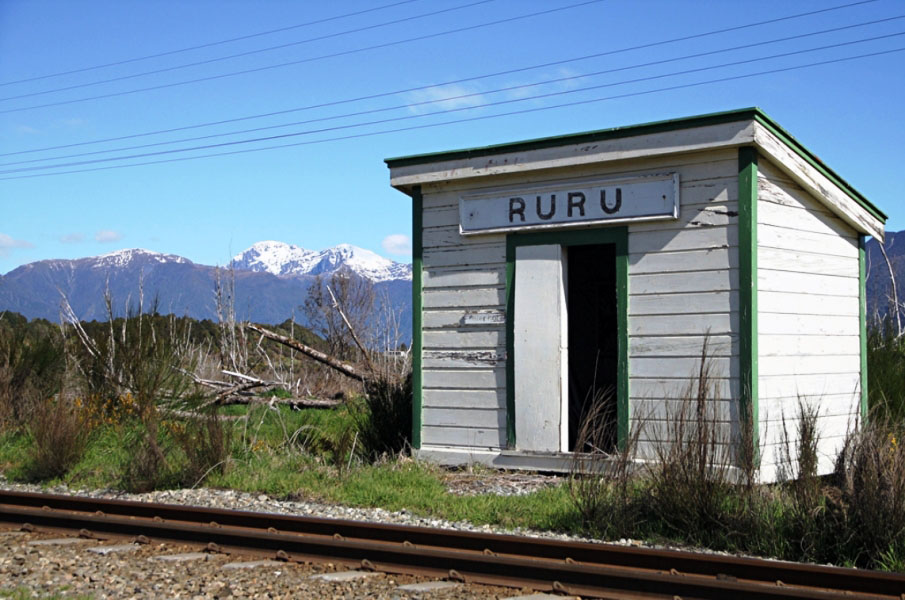
Historical Significance or Value The Moana Station was the main crossing station for trains on the Midland line and the only staffed one on the Stillwater to Otira line and as such its staff were responsible for the operation of the nearby milling stations at Kotuku, Ruru and Te Kinga. Moana was also important for the 'picnic' trains bringing people to Lake Brunner.
Physical Significance
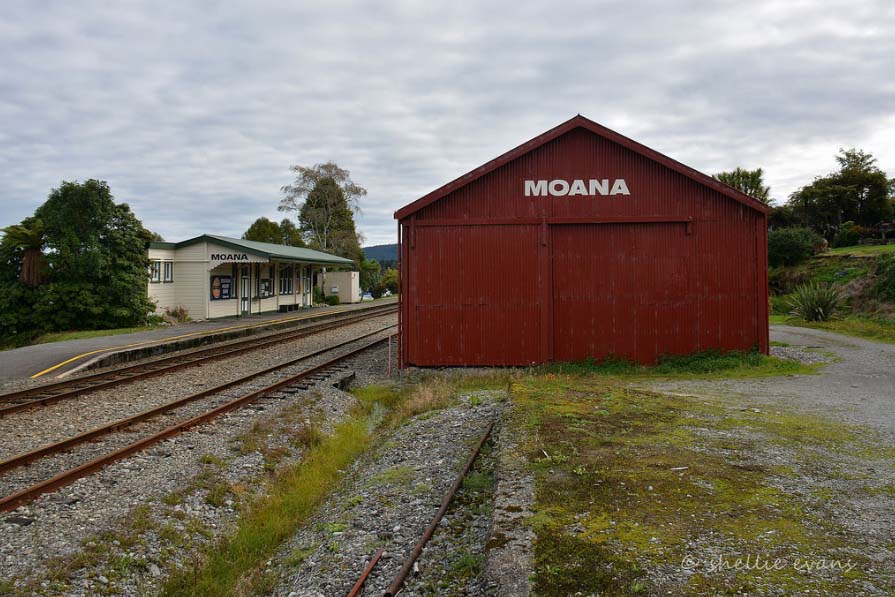
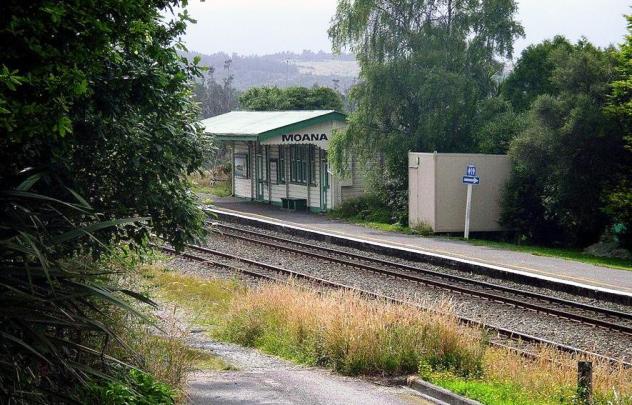
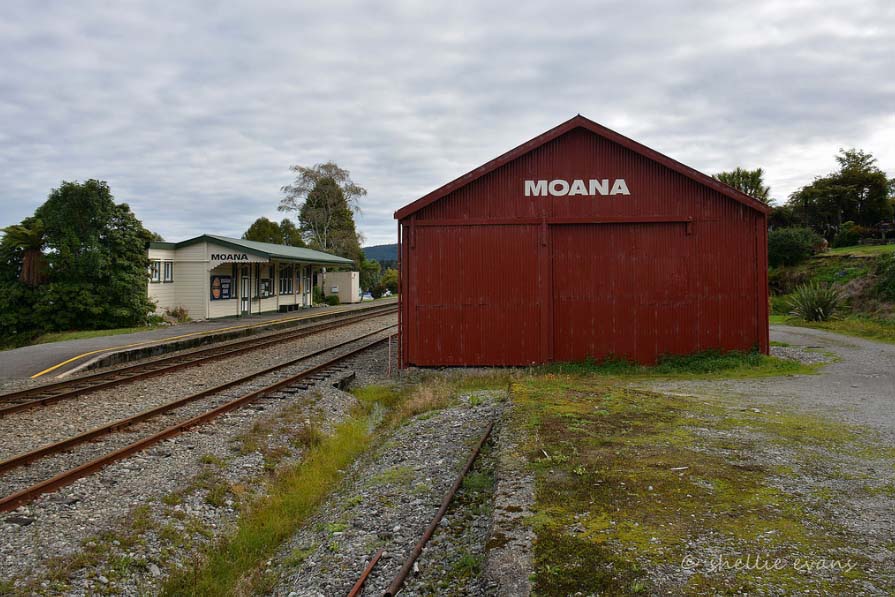
ARCHITECTURAL QUALITY: The Type A stations were the smallest of the standard designs for staffed stations updated by George Troup in 1904 in his capacity as Office and Designing Engineer of the Railways Department. Type A once accounted for about fifteen per cent of all railway stations in New Zealand. Standardisation of design allowed the Railways Department to economise on the construction of railway stations. Troup's revised designs were slightly more decorative and used more substantial door and window joinery than those erected before 1900. Standard design railway stations and their direct variations once accounted for over eighty per cent of all station buildings in the country, but Moana Railway Station is the only type A which is still extant in New Zealand with its associated sidings and goods sheds. It is important as representing Type A Stations, a significant group of standard design stations in New Zealand. TOWNSCAPE/LANDMARK VALUE: The railway station at Moana is a modest structure which stands in a picturesque environment and makes an important contribution to the townscape of Moana, particularly because its immediate railway environment has been preserved.
Why is this place significant?
Historic Significance
Historical Significance or Value The Moana Station was the main crossing station for trains on the Midland line and the only staffed one on the Stillwater to Otira line and as such its staff were responsible for the operation of the nearby milling stations at Kotuku, Ruru and Te Kinga. Moana was also important for the 'picnic' trains bringing people to Lake Brunner.
Physical Significance
ARCHITECTURAL QUALITY: The Type A stations were the smallest of the standard designs for staffed stations updated by George Troup in 1904 in his capacity as Office and Designing Engineer of the Railways Department. Type A once accounted for about fifteen per cent of all railway stations in New Zealand. Standardisation of design allowed the Railways Department to economise on the construction of railway stations. Troup's revised designs were slightly more decorative and used more substantial door and window joinery than those erected before 1900. Standard design railway stations and their direct variations once accounted for over eighty per cent of all station buildings in the country, but Moana Railway Station is the only type A which is still extant in New Zealand with its associated sidings and goods sheds. It is important as representing Type A Stations, a significant group of standard design stations in New Zealand. TOWNSCAPE/LANDMARK VALUE: The railway station at Moana is a modest structure which stands in a picturesque environment and makes an important contribution to the townscape of Moana, particularly because its immediate railway environment has been preserved.
Construction Professional
Name
Troup, George Alexander
Type
Architect
Biography
G A Troup (1863-1941) was born in London in 1863 and educated in Scotland. He trained as an architect and engineer under C E Calvert of Edinburgh and came to New Zealand in 1884. After a short time with the Survey Department in Otago he became a draughtsman for New Zealand Railways in Dunedin and then, from 1888, in Wellington. Troup became Chief Draughtsman in 1894. He designed many station buildings throughout the county, some of which are still in use today; these buildings form an important part of New Zealand's landscape. His best known building is the Dunedin Railway Station (1904-07). He also designed the head office building in Wellington for Railways (1901, now demolished). Troup became a Fellow of the Royal Institute of British Architects in 1907. After World War I he was promoted to head the newly established Architectural Branch of New Zealand Railways. On retirement from Railways in 1925 he entered local body politics and was Mayor of Wellington from 1927 to 1931. Troup was prominent in the Presbyterian Church and founded the Presbyterian Young Men's Bible Class Union. He was an elder of the church for 47 years and also served on the governing bodies of several Wellington secondary schools. Education was a life-long interest and he was keenly involved in the training of engineering cadets in New Zealand Railways. Troup was knighted in 1937 and died in 1941. Last updated 1 October 2014 See also: James Veitch. 'Troup, George Alexander', Dictionary of New Zealand Biography, first published in 1993. Te Ara - the Encyclopedia of New Zealand, https://teara.govt.nz/en/biographies/2t49/troup-george-alexander
Construction Details
Start Year
1892
Type
Original Construction
Description
Opening of railway line from Brunner to Moana, Lake Brunner
Start Year
1895
Type
Original Construction
Description
Lean-to station building (with booking office and telephone station) and platform built
Start Year
1901
Type
Modification
Description
Station extended and fireplace put in.
Start Year
1911
Type
Refurbishment/renovation
Description
Station building extended at west end (refreshment rooms)
Start Year
1926
Type
Demolished - Fire
Description
Railway Station building destroyed by fire
Start Year
1926
Type
Original Construction
Description
replacement Railway Station building constructed
Start Year
1958
Type
Modification
Description
Platform front renewed in concrete and platform shortened to 78 metres.
Type
Modification
Description
Front section of verandah removed to accommodate modern railway loads.
Construction Materials
Rusticated weatherboards. Corrugated iron roof. Railway irons support the verandah roof.
Construction Professional
Name
Troup, George Alexander
Type
Architect
Biography
G A Troup (1863-1941) was born in London in 1863 and educated in Scotland. He trained as an architect and engineer under C E Calvert of Edinburgh and came to New Zealand in 1884. After a short time with the Survey Department in Otago he became a draughtsman for New Zealand Railways in Dunedin and then, from 1888, in Wellington. Troup became Chief Draughtsman in 1894. He designed many station buildings throughout the county, some of which are still in use today; these buildings form an important part of New Zealand's landscape. His best known building is the Dunedin Railway Station (1904-07). He also designed the head office building in Wellington for Railways (1901, now demolished). Troup became a Fellow of the Royal Institute of British Architects in 1907. After World War I he was promoted to head the newly established Architectural Branch of New Zealand Railways. On retirement from Railways in 1925 he entered local body politics and was Mayor of Wellington from 1927 to 1931. Troup was prominent in the Presbyterian Church and founded the Presbyterian Young Men's Bible Class Union. He was an elder of the church for 47 years and also served on the governing bodies of several Wellington secondary schools. Education was a life-long interest and he was keenly involved in the training of engineering cadets in New Zealand Railways. Troup was knighted in 1937 and died in 1941. Last updated 1 October 2014 See also: James Veitch. 'Troup, George Alexander', Dictionary of New Zealand Biography, first published in 1993. Te Ara - the Encyclopedia of New Zealand, https://teara.govt.nz/en/biographies/2t49/troup-george-alexander
Construction Details
Start Year
1892
Type
Original Construction
Description
Opening of railway line from Brunner to Moana, Lake Brunner
Start Year
1895
Type
Original Construction
Description
Lean-to station building (with booking office and telephone station) and platform built
Start Year
1901
Type
Modification
Description
Station extended and fireplace put in.
Start Year
1911
Type
Refurbishment/renovation
Description
Station building extended at west end (refreshment rooms)
Start Year
1926
Type
Demolished - Fire
Description
Railway Station building destroyed by fire
Start Year
1926
Type
Original Construction
Description
replacement Railway Station building constructed
Start Year
1958
Type
Modification
Description
Platform front renewed in concrete and platform shortened to 78 metres.
Type
Modification
Description
Front section of verandah removed to accommodate modern railway loads.
Construction Materials
Rusticated weatherboards. Corrugated iron roof. Railway irons support the verandah roof.
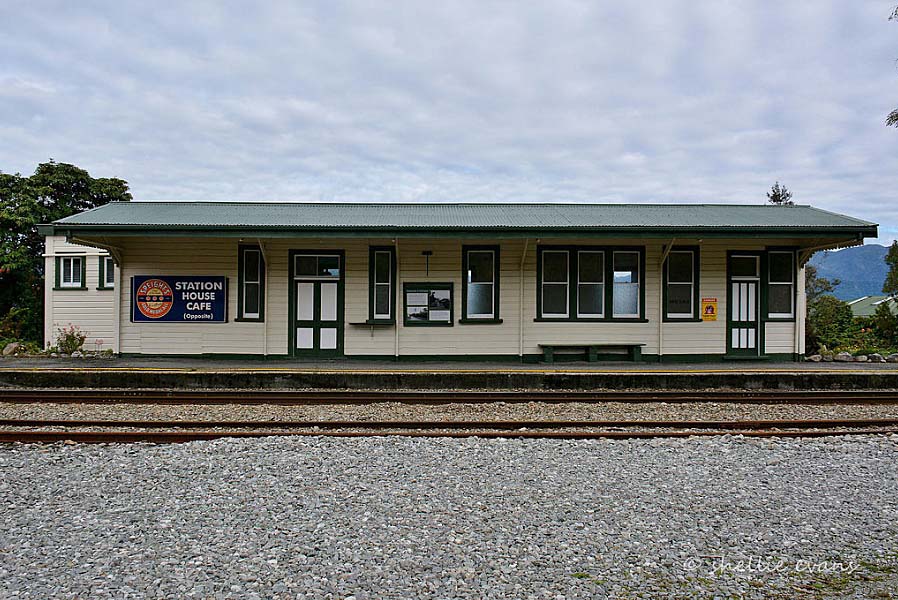
ARCHITECTURAL DESCRIPTION: The station is built to the standard type A design, consisting of office, lobby, women's waiting room and women's toilet. As built, the main entry was from the platform through a pair of double doors. These doors have a fanlight and are flanked by narrow sash windows. This association of double doors and windows was a typical Troup station architectural feature. Internal doors link the other rooms. All rooms have horizontal tongue and groove lining. At the west end is a postal lobby with separate entrance from the platform. The office has a fireplace built of tapestry bricks with an external chimney breast. There is a ticket window into the lobby, and a service hatch into the postal lobby. Moana Station is built as the mirror image of a standard A design. This was presumably to ensure that visitors using the overbridge would arrive at the post office first and the toilets last! The office and lobby have windows in the back wall to provide fine lake views. At some time the women's waiting room has been connected to a lobby open to the platform. The verandah which shelters the station platform is supported by six railway irons which are bolted to the front of the station building and bend out to meet the verandah eaves. The ends of the verandah are fitted with vertical valances which have been cut so as to form a scalloped edge which is the only decorative feature of the building. Approximately one hundred metres west of the station is a pedestrian overbridge which is the only all wooden example of its kind left in New Zealand. MODIFICATIONS: 1958 - Platform front renewed in concrete and platform shortened to 78 metres. Date Unknown - Front section of verandah removed to accommodate modern railway loads.
ARCHITECTURAL DESCRIPTION: The station is built to the standard type A design, consisting of office, lobby, women's waiting room and women's toilet. As built, the main entry was from the platform through a pair of double doors. These doors have a fanlight and are flanked by narrow sash windows. This association of double doors and windows was a typical Troup station architectural feature. Internal doors link the other rooms. All rooms have horizontal tongue and groove lining. At the west end is a postal lobby with separate entrance from the platform. The office has a fireplace built of tapestry bricks with an external chimney breast. There is a ticket window into the lobby, and a service hatch into the postal lobby. Moana Station is built as the mirror image of a standard A design. This was presumably to ensure that visitors using the overbridge would arrive at the post office first and the toilets last! The office and lobby have windows in the back wall to provide fine lake views. At some time the women's waiting room has been connected to a lobby open to the platform. The verandah which shelters the station platform is supported by six railway irons which are bolted to the front of the station building and bend out to meet the verandah eaves. The ends of the verandah are fitted with vertical valances which have been cut so as to form a scalloped edge which is the only decorative feature of the building. Approximately one hundred metres west of the station is a pedestrian overbridge which is the only all wooden example of its kind left in New Zealand. MODIFICATIONS: 1958 - Platform front renewed in concrete and platform shortened to 78 metres. Date Unknown - Front section of verandah removed to accommodate modern railway loads.
Historical and Associated Iwi / Hapū / Whānau
Completion Date
31st January 2022
Report Written By
Robyn Burgess
Information Sources
Archives New Zealand (Chch)
Archives New Zealand (Christchurch)
Mahoney, 1987
J. D. Mahoney, Down at the Station: A Study of the New Zealand Railway Station, Palmerston North, 1987
Troup, 1982
G. Troup, George Troup: Architect and Engineer, Palmerston North, 1982
University of Canterbury
University of Canterbury
West Coast Scrapbook
West Coast Scrapbook
Wright, 2010
Wright, Stephen and Andrew Wright, West of the Divide: More Memories of the Midland Line, 2010
Other Information
A fully referenced copy of an upgrade report can be requested from the Southern Regional Office of Heritage New Zealand Pouhere Taonga. This historic place was registered under the Historic Places Act 1980. This report includes the text from the original Building Classification Committee report considered by the NZHPT Board at the time of registration. Please note that entry on the New Zealand Heritage List/Rarangi Korero identifies only the heritage values of the property concerned, and should not be construed as advice on the state of the property, or as a comment of its soundness or safety, including in regard to earthquake risk, safety in the event of fire, or insanitary conditions.
Historical and Associated Iwi / Hapū / Whānau
Completion Date
31st January 2022
Report Written By
Robyn Burgess
Information Sources
Archives New Zealand (Chch)
Archives New Zealand (Christchurch)
Mahoney, 1987
J. D. Mahoney, Down at the Station: A Study of the New Zealand Railway Station, Palmerston North, 1987
Troup, 1982
G. Troup, George Troup: Architect and Engineer, Palmerston North, 1982
University of Canterbury
University of Canterbury
West Coast Scrapbook
West Coast Scrapbook
Wright, 2010
Wright, Stephen and Andrew Wright, West of the Divide: More Memories of the Midland Line, 2010
Other Information
A fully referenced copy of an upgrade report can be requested from the Southern Regional Office of Heritage New Zealand Pouhere Taonga. This historic place was registered under the Historic Places Act 1980. This report includes the text from the original Building Classification Committee report considered by the NZHPT Board at the time of registration. Please note that entry on the New Zealand Heritage List/Rarangi Korero identifies only the heritage values of the property concerned, and should not be construed as advice on the state of the property, or as a comment of its soundness or safety, including in regard to earthquake risk, safety in the event of fire, or insanitary conditions.
Former Usages
General Usage: Transport
Specific Usage: Railway station/ platform/ refreshment room
Web Links
description: Engineering NZ Heritage
url: https://www.engineeringnz.org/our-work/heritage/heritage-records/midland-railway/
Former Usages
General Usage: Transport
Specific Usage: Railway station/ platform/ refreshment room
Web Links
description: Engineering NZ Heritage
url: https://www.engineeringnz.org/our-work/heritage/heritage-records/midland-railway/
Location
Get the latest heritage news, features and events delivered
straight to your inbox.